Artificial intelligence in hematology refers to the fact that computer technology is used to assist in the interpretation of medical data on blood disorders. AI is not a thinking machine that decides whether to act medically or not. Rather, it seeks the patterns in data based on the rules it has acquired from the previous mass amounts of medical information.
Ai technology in Hematology operates with the idea of processing information that physicians already utilize on a daily basis. They are not used to substitute physicians. Instead, they assist doctors in a more effective organization and review of complicated data.
The data that is typically analyzed by AI is:
- Findings of regular blood analyses, including complete blood counts.
- Photos of bone marrow cells and blood cell samples.
- Genetic and molecular testing results.
- Alteration of laboratory findings over time.
- Medical chart notes and records of a patient.
When all this data is sorted and analyzed simultaneously, AI is able to assist hematologists in identifying unusual findings much sooner and identifying patterns that otherwise may not be apparent. Nevertheless, these tools are not applied in any extraordinary medical treatment, and only with the assistance of trained physicians.

Who Benefits from AI in Hematology
Although AI is not appropriate for all patients and situations, it can be very useful for some patients in hematology. Some patient groups are more likely to benefit from the use of AI-based tools, and these patients can be outlined as follows:
1. Patients with Complex Blood Disorders
Complex diseases like leukemia, lymphomas, myelodysplastic syndromes, and some hereditary blood disorders might be the cause, where a complex interpretation of test results is necessary for the patients. Among the uses of AI is in assisting physicians in deriving meaning in a large volume of data that can otherwise be challenging to interpret by a human in one test result and discovering patterns otherwise not apparent.
2. Patients Requiring Frequent Monitoring
There are diseases that require blood tests to be done regularly. An example here is when a patient has a tendency to visit the laboratory regularly in case he or she has multiple myeloma or CLL. The AI system will be able to compare the current blood results of the patients with the past results in real time.
AI could take several processes faster. Digital pathology solutions that have adopted AI can analyze bone marrow or a lymph node biopsy within minutes, as opposed to current solutions. Although a human doctor must continue interpreting results, the inclusion of AI in the equation will assist in locating key areas of interest and decrease the turnaround times.
3. Patients Requesting Personalized Risk Assessments
By combining information from the use of lab tests, imaging, genetic data and a patient’s medical history, AI could offer more accurate estimates of risk. In some cases, for individual patients, this can be more accurate than traditional risk-scoring models. These estimates can help doctors determine the level of precision they need to treat the patient and how closely the patient needs to be monitored.
AI in Hematologic Diagnosis
This is because AI has been proven to be of great help in aiding diagnosis, particularly in the hematology laboratory. Numerous contemporary laboratories have switched to systems that are based on artificial intelligence to help in reviewing and prioritizing samples.
These are not diagnostic tools, but they assist clinicians in processing large amounts of data more consistently.
The AI diagnostics applications include:
- Computerized blood smear analysis.
- Recognition of dysmorphic red blood cells.
- Indications of possible hematological disease.
- Supporting the early diagnosis of leukemia and cancers.
AI algorithms have been examined in applications in conditions like acute myeloid leukemia, acute lymphoblastic leukemia and acute promyelocytic leukemia to differentiate between malignant and normal cells. The systems are usually based on deep convolutional neural networks, which are trained to detect fine visual variations in blood or bone marrow samples.
Although controlled studies have promising outcomes, AI-based diagnostic tools never substitute either confirmatory testing or specialist interpretation. The process of diagnosis is still a physician-centered process.
AI and Risk Assessment in Hematology
In addition to the diagnosis, risk stratification and disease monitoring are other areas where AI is becoming more important. In hematology and oncology, clinicians have to consider a complex of clinical, laboratory, and molecular factors to determine the prognosis.
This information can be organized with the help of AI systems to find statistical patterns that can be used to discuss risks.
AI can be used to aid in risk assessment by:
- Determining those patients who are more vulnerable to disease.
- Supporting the prediction of treatment response.
- The detection of the initial signs of the relapse based on lab trends.
- Helping with screening clinical trials eligibility.
In the case of hematological malignancies such as leukemia, such tools can assist the physician in closer monitoring of the disease behaviour. Predictions by AI, however, are not guaranteed, but rather a set of probabilities, and should never be taken out of context in clinical practice.
AI in Treatment Decision Support
Hematology is a complicated field and treatment planning is a personalized one. AI does not pick treatments on its own, but is capable of assisting doctors with massive data on past outcomes.
The AI tools could help in clinical practice with:
- Comparison of treatment options among similar patients.
- Observing therapy response with time.
- Action taken to point out unexpected changes in the labs.
- Endorsing customized medicine procedures.
As an illustration, AI models can be used to analyze trends in molecular data and responses to treatment in acute myeloid leukemia patients to aid clinicians who are attempting to determine which therapies have worked best in similar instances in the past. Finally, the ultimate decision on treatment, however, is always left to the treating hematologist.
AI is not a decision-maker but rather a decision-support tool.
What AI Cannot Do in Hematology
Understanding the limitations of artificial intelligence is the secret to patient safety and trust. Although the technologies of AI have been developed, it can be seen that the science of systems has its boundaries to what it can do and what it cannot do.
AI cannot:
- Replace professional knowledge or experience of a doctor.
- Address the patient as a whole in regard to his or her preferences, values, or symptoms.
- Decision making (contextual or ethical).
- Guarantee the accuracy of the results of diagnoses.
- Work with bad quality data.
The AI systems will only depend on the data required to train them. The outcomes of AI are not always reliable when the data is either unfinished, biased, unverified, or not representative of the population. That is why AI ought to be properly validated and continuously monitored under clinical settings.
What This Means For Patients
AI application in hematology needs to be monitored. The use of artificial intelligence in the clinical care of the U.S. is institutionalized and controlled. In most cases, AI operates silently in the background with most patients.
The actual communication with an AI tool might not occur at all, but its implementation can influence the pace with which the results will be reviewed or the efficiency with which the abnormal findings will be identified.
The potential benefits to the patient include:
- Recent progress in timeliness in the detection of suspicious test results.
- Greater standardization of lab interpretation.
- Enhanced monitoring of disease trend.
- Better inter-team performance.
Patients should be permitted to ask their healthcare providers as regards to how they communicate test results and how they use technology to assist patients. Transparency is still included in patient-centered hematology. At Heme On Call, we love to help patients understand how contemporary hematologic care functions and what the clinical reality is.
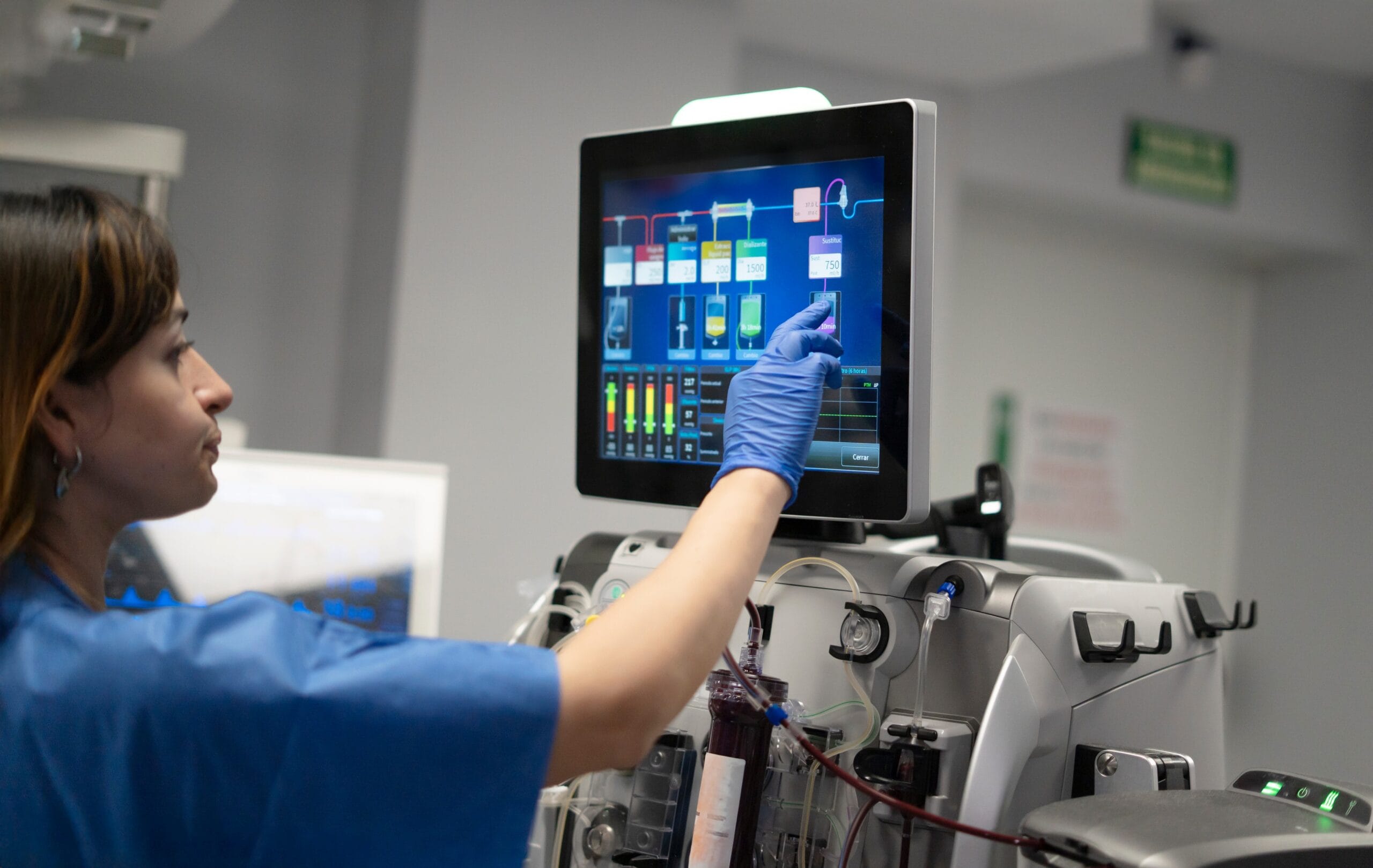
Where AI Helps The Most
The knowledge of AI value addition can make patients aware of what they should expect in their care.
AI can be useful in particular cases when:
- The data that should be analyzed is enormous.
- Patterns are very slight and cannot be observed easily using the naked eye.
- To determine risk or treatment reactions, there are several factors.
- Time is of the essence, and prompt analysis might enhance care.
To illustrate, AI can be used to shorten the time interval in the assessment of bone marrow biopsy images and enhance the detection of abnormalities. Artificial intelligence can be more complete than standard spreadsheets in the process of determining the risks of particular leukemias, relying on both genetic and clinical data.
AI is able to be helpful in medical care, although your health decisions must always be made by a qualified specialist. Make an appointment with a hematologist and talk about your findings, worries, or concerns, and plan of action with him or her with confidence.