So your friend lost two dress sizes on a weekly jab, and now you are thinking about it too. Honestly, who wouldn’t. GLP-1 receptor agonists, semaglutide (Ozempic, Wegovy), liraglutide, and tirzepatide, are no longer niche diabetes medications, but ones your aunt is discussing at Thanksgiving.
They work fast, and for many people with type 2 diabetes or obesity they have genuinely changed the trajectory of their health. What the headlines leave out is what these drugs do while the weight is coming off. They slow digestion, curb appetite hard, and there is growing evidence they mess with how your gut absorbs certain nutrients. Iron is near the top of that list. You can lose weight right on schedule and still be iron deficient without knowing it.
We hear this at Heme On Call often. Dr. Fein and the telemedicine hematology team work with patients in Florida who came in for weight loss and six months later were wondering why they felt so wiped out. Ferritin had slipped down a cliff. It is usually easy to fix when you catch it before it escalates into full-blown anemia.

Why GLP-1 Medications Redefine Nutrient Intake
One of the hormones that your gut produces is called glucagon-like peptide-1, and a GLP-1 receptor agonist mimics it. The job of that hormone is essentially: inform the brain that it is full, slow the stomach down, push the pancreas to process insulin more efficiently. That translates to improved blood sugar control in patients with type 2 diabetes. In a person on Wegovy, it can mean 15 percent or greater loss of body weight in a year. That’s no small thing.
Here’s the catch. Some nutrients fall harder than others when you eat less over long periods, and people starting GLP-1s are not necessarily entering treatment with optimal nutrition. Type 2 diabetes patients and obese patients often have baseline nutrient deficiencies before the first dose. The margin is already slim. A US database study of roughly 461,000 adults on GLP-1 medications found 12.7% developed a nutritional deficiency within six months, rising to 22% at twelve months.
What the Research Says on Semaglutide and Iron Absorption
Part of it is due to eating less. But not all of it.
In 2025, a pilot study by Melis and colleagues, published in Diabetes, Obesity and Metabolism, recruited 51 patients with type 2 diabetes and measured their intestinal iron absorption before and after 10 weeks of semaglutide therapy. Method was straightforward. Give a 350 mg ferrous fumarate capsule (115 mg of iron) on an empty stomach, wait two hours, draw blood, observe how much iron got into the bloodstream. Same test at baseline and at 10 weeks on a 1 mg weekly maintenance dose.
The figures were telling. Median relative reduction in iron absorption was 13% across the group. Roughly 18% of participants, nearly one in five, dropped by 30% or more, which the researchers considered clinically significant. Same patient, same dose of oral iron, swallowed the same way. Just noticeably less of it getting where it needed to go. You can read the full paper via the National Institutes of Health.
The researchers also looked into who was better off. Lower weight patients with lower baseline ferritin were more likely to absorb iron, which is biologically reasonable. When iron stores are already depleting, the gut works harder to draw iron in. What’s more interesting is that prior exposure to SGLT2 inhibitors also predicted better absorption. Different diabetes drugs pull iron metabolism in different directions. Something to chew on if you are choosing between classes of drugs with your physician.
A second dataset reinforces the pattern. A national register study of adults with type 2 diabetes and hemochromatosis (a hereditary condition where the body stores iron) found GLP-1 users had ferritin levels 26 to 30% lower than SGLT2 users, even in that group where too much iron is the usual problem. When a drug can lower iron stores in people whose bodies are literally built to store it, that speaks volumes about its reach.
The Role of Rapid Weight Loss in Iron Loss
Set aside the absorption question a moment. Weight loss alone strains nutrient stores. Menstruating women already teetering on the edge of iron deficiency anemia can slip into actual deficit within months of starting a GLP-1.
Do the math. Intake goes down because you are eating less. Absorption goes down because semaglutide appears to disrupt it. Your body’s iron requirements do not budge. Three levers, all going the wrong direction. That combination can take a woman in her thirties or forties who was already operating on a thin margin from decent ferritin to depleted in a dozen months flat.
That is why many GLP-1 users become iron deficient long before they can see anemia on a CBC. Ferritin, the marker of iron stores, drops first. Hemoglobin limps along behind it. By the time the person notices that their hair is falling out in the shower, that they are climbing the stairs like they are dragging bricks, or kicking their partner at 2 a.m. with their restless legs, the iron stores have been on a downward trend long before.
Most Common Nutritional Deficiencies
Iron gets top billing, but it’s not alone. GLP-1 patients, especially those losing weight rapidly, tend to show a cluster of nutritional deficiencies on routine labs. Vitamin D is the most common and is generally subclinical: the patient feels fine but the number comes back low. Iron deficiency, with or without anemia, shows up as low serum iron, low ferritin, sometimes low hemoglobin. B12 is another, particularly in people on metformin long-term (metformin has its own complicated history with B12). Thiamine (vitamin B1) is rarer but more serious, with real case reports of full thiamine deficiency syndromes during rapid weight loss on GLP-1 drugs. Round it out with protein, zinc, selenium, and calcium deficiencies in patients who are barely eating.
A decent multivitamin is a decent starting point for anybody on a GLP-1. It is not the cure to true iron deficiency, however. After ferritin falls below a certain level, a Centrum will not bail you out. You need targeted replacement.
Testing Before and During GLP-1 Treatment
The most boring safeguard is the best one: run labs. Preferably prior to the initial dose of a GLP-1 receptor agonist, and subsequently at regular intervals when therapy is established. A minimum panel should consist of a CBC, serum iron with total iron-binding capacity and transferrin saturation, ferritin, a vitamin D (25-OH), and a B12.
Dr. Fein likes to work with a ferritin level above 50 ng/mL, and 70 or more in patients who want to feel like themselves. The thing is, many primary care clinicians will not raise a red flag until ferritin falls below 15 or 20, which is already deep in the deficiency range. That is too long to wait.
In patients with diabetes and chronic kidney disease, or anyone who has had iron deficiency anemia on their chart in the past, there is no option to skip baseline labs. These are the groups in which iron problems multiply most rapidly when a GLP-1 is involved.
Symptoms of Low Iron That Are Disregarded on a GLP-1
Being fatigued on a GLP-1 is, after all, normal. It is difficult to lose a lot of weight, and the drugs themselves can drain your energy in the first few weeks. That’s exactly why iron deficiency slips through the cracks. Patients attribute it to the drug, or the loss of weight, or life.
Watch for:
- Fatigue that does not subside once you have adjusted to the drug
- Feeling out of breath on stairs or on a light walk
- Pale skin, pale lower eyelids, pale nail beds
- Loss of hair other than normal, or nails that continue to split
- Restless legs at night
- Ice, dirt, or other non-food cravings (yes, really, it is known as pica)
When two or more of those are appearing after a few months on a GLP-1, don’t white-knuckle it. Ask for the labs. Our guide on low iron symptoms in women takes us through how this manifests.

Treatment of Iron Deficiency on GLP-1 Medication
And now to the practical. Half the battle is spotting the problem. The rest is fixing it without sacrificing the weight loss or the glucose control that made the GLP-1 worth taking in the first place.
First, as a rule, oral iron. Oral iron is the preferred option in mild-to-moderate iron deficiency in the absence of anemia. A ferrous sulfate or ferrous fumarate tablet, combined with a small amount of vitamin C to be absorbed, taken on an empty stomach and not with other oral medications. However, if the Melis data holds up and GLP-1 drugs attenuate oral absorption, many patients will require more dose or a longer course of supplementation than a non-GLP-1 patient would.
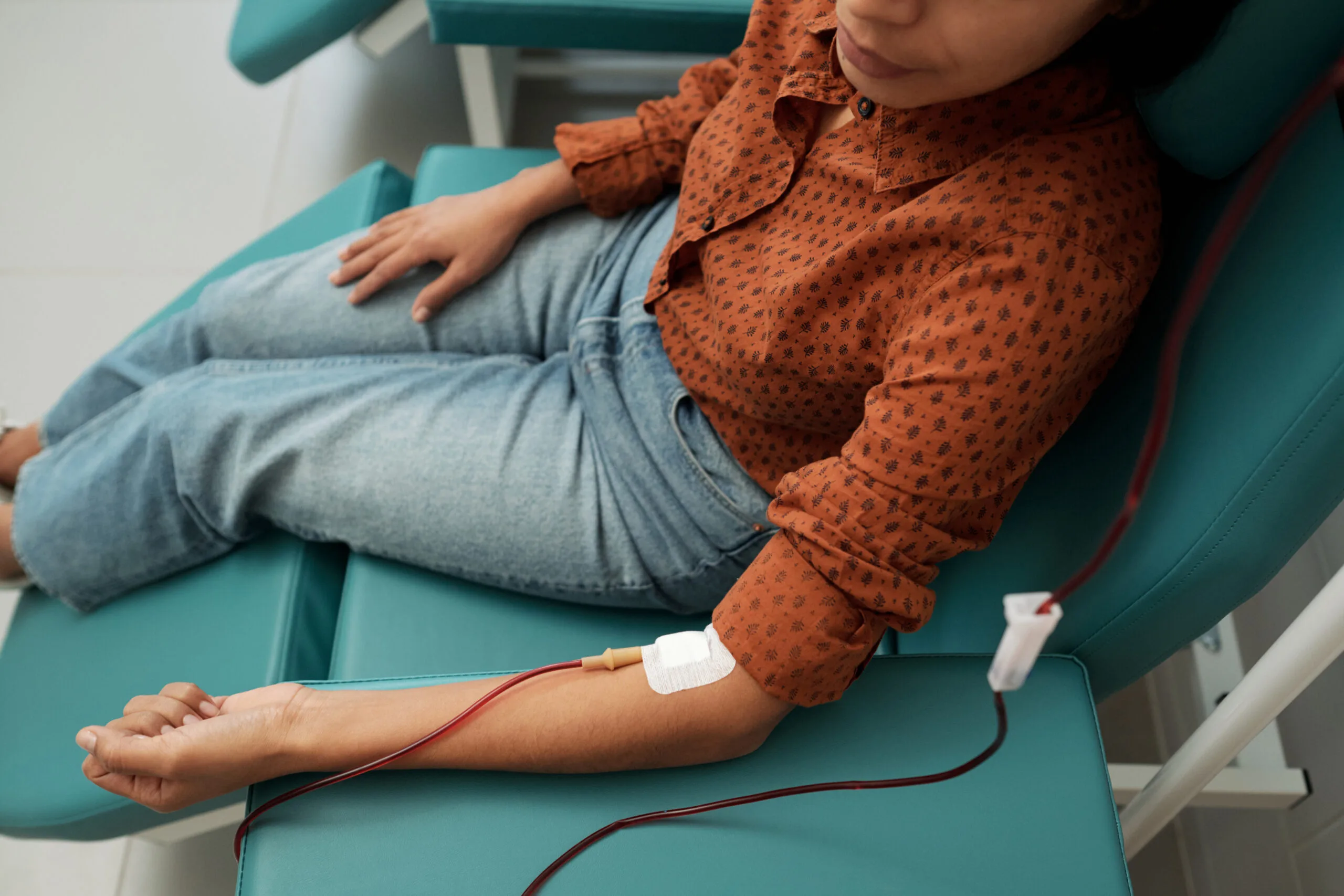
IV iron when orally is not cutting it. In severe iron deficiency, in patients who cannot take oral iron (iron pills on top of GLP-1 nausea is an unpleasant combination), or in anyone whose absorption is evidently defective, intravenous iron is the faster and more reliable option. An iron infusion puts iron directly into the blood, bypassing the gut altogether. Heme On Call operates infusion centers in Florida in Hollywood, South Miami, St. Petersburg, Tampa, and North Palm Beach.
Diet and follow-up. Lean red meat, poultry, legumes, pumpkin seeds, dark leafy greens, all combined with something rich in vitamin-C in the same meal. Helpful, but not a rescue strategy. Recheck ferritin and a CBC at about eight to twelve weeks to check where things have settled.
Low iron is not an indication to discontinue a working GLP-1. It is one of the reasons to treat the iron. You can do both.
When to Talk to a Hematologist
The majority of mild iron deficiency cases on a GLP-1 can be handled between the patient and his or her primary care physician or endocrinologist. Bring in a hematologist when ferritin does not respond after three or more months of oral iron, when frank anemia occurs, when oral iron is intolerable, or when iron deficiency is in line with chronic kidney disease, heavy periods, a history of GI bleeding, or pregnancy.
Telemedicine hematology is what Heme On Call was built for, and it makes that step a lot easier than it used to be. The practice covers women’s health hematology, iron deficiency, clotting and bleeding, abnormal counts, and chronic leukemia, with online visits plus in-person infusion services where needed.
Get Professional Assistance with Iron Levels
Heme On Call was the first telemedicine hematology practice in the country, started by Dr. Fein. For patients on GLP-1 therapy, we provide iron deficiency and anemia consultations, guidance when oral supplementation is not working, and IV infusion services at our Florida centers. A ferritin test is cheap, fast, and the single most useful number for anyone in their first year on a GLP-1. It is also the number most patients never have drawn. If that drag-through-mud feeling is more than just the drug, checking your iron is the right first move. Request a televisit and we can help you get answers quickly.